

The Harsh Reality of Computing in Space
Computers power everything in space exploration — from satellites, space probes, International Space Station systems, to Mars rovers navigating alien terrain.
Yet, the hardware inside these spacecraft looks nothing like the gaming PCs, laptops, or servers we use on Earth.
That’s because space is one of the most hostile environments imaginable:
-
Extreme temperatures from -150°C to +150°C
-
Cosmic radiation strong enough to corrupt memory
-
No atmosphere for cooling
-
Vacuum that destroys materials not built for it
-
Zero tolerance for hardware failure
While Earth computers are optimized for speed and performance, space computers are optimized for reliability, radiation resistance, and survival.
This article explores exactly what kind of PC hardware is used in orbit and deep space — and why it is so unique.
🧠 1. Radiation-Hardened CPUs: The Brain of Spacecraft
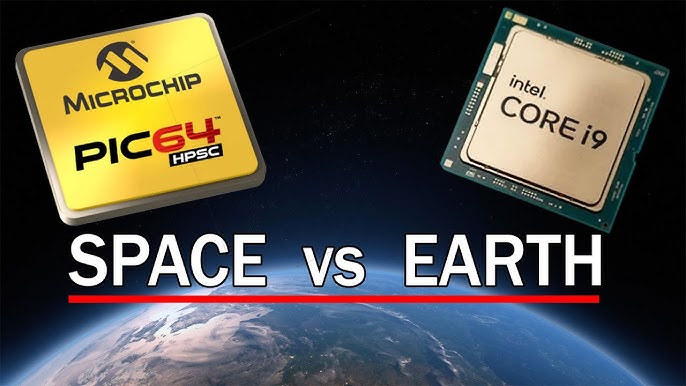
Cosmic radiation is the #1 enemy of electronics. If you put a Ryzen 9, Intel i9, or even a smartphone CPU into orbit, it would fail almost instantly due to bit flips, stored-charge corruption, and hardware breakdown.
To survive space radiation, spacecraft use rad-hard processors.
🛰 RAD750 — The Most Famous Space CPU
Used in:
-
NASA’s Curiosity rover
-
Perseverance rover
-
Juno spacecraft
-
James Webb Space Telescope
-
Orion spacecraft
Specs:
-
~200 MHz
-
400 MIPS
-
10W power draw
On paper, this CPU is weaker than a budget smartphone.
But it’s built with:
-
Radiation-resistant silicon
-
Triple-redundant logic
-
Hardened circuit pathways
-
Extreme thermal tolerance
The RAD750 can survive radiation levels that would destroy a normal CPU instantly.
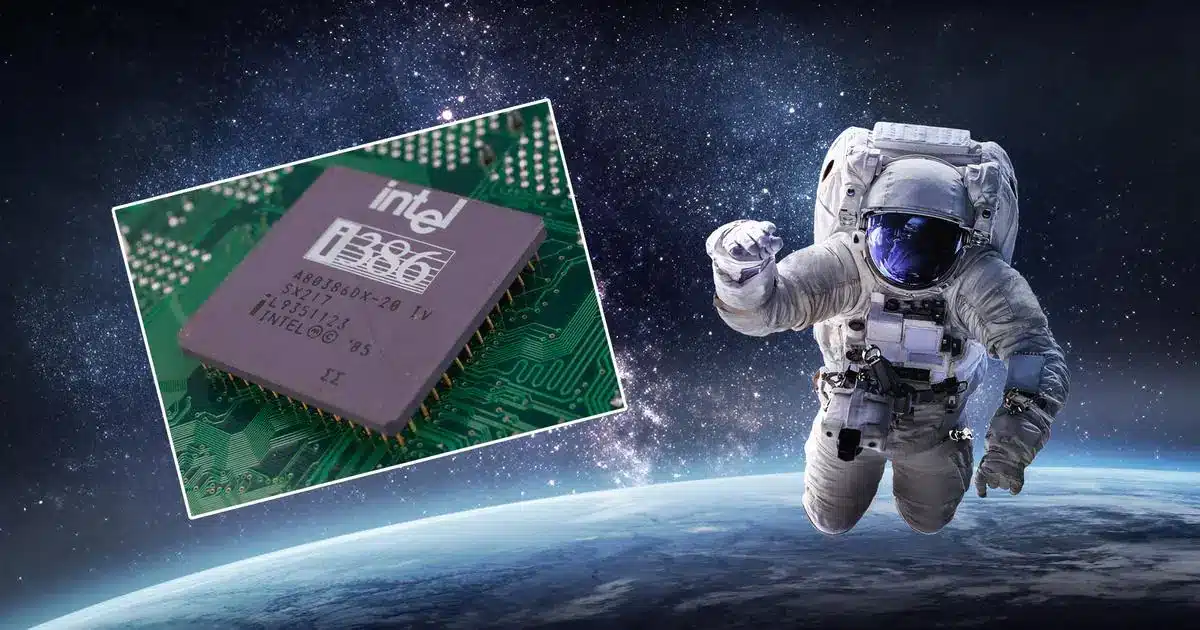
🛰 RAD5545 — The Modern Upgrade
A quad-core PowerPC CPU designed for next-gen spacecraft.
Features:
-
~1.2 GHz clock
-
Supports DDR3 & PCIe
-
Massive radiation tolerance
-
10+ year reliability window
It’s still not “fast,” but far more capable than older chips.
🛰 ESA’s LEON Processors (LEON2, LEON3, LEON4)
These are open-source SPARC CPUs used heavily in:
-
European satellites
-
Ariane rockets
-
ESA deep-space missions
They combine:
-
Low power
-
High reliability
-
Full radiation hardening
🔧 2. GPUs & Co-Processors in Space: “AI in Orbit”
Historically, spacecraft didn’t use GPUs — too hot, too power hungry, too fragile.
But modern missions require heavy image processing, autonomous navigation, and AI-driven decision-making.
So now we see:
🛰 NVIDIA Jetson Modules (Modified for Space)
NASA uses ruggedized Jetson modules (like Jetson Xavier and Jetson TX2) to support:
-
AI-powered terrain analysis
-
Real-time hazard detection
-
Camera image processing
-
Autonomous rover driving
These are not consumer Jetsons — they are redesigned to withstand radiation and temperature extremes.
🛰 FPGAs — The Real Workhorses
FPGAs (Field Programmable Gate Arrays) are extremely common in space.
Why spacecraft love them:
-
Reprogrammable in orbit
-
Highly parallel processing
-
Can be hardened against radiation
-
Perfect for navigation, communication, and sensor fusion
Popular space-grade FPGAs include:
-
Xilinx Virtex-5QV
-
Microchip RTG4
These chips handle:
-
Video compression
-
Signal processing
-
Antenna control
-
Onboard AI
-
Encryption
🧵 3. Memory & Storage: Built to Survive Radiation
You might assume spacecraft use SSDs or DDR5 RAM — but space hardware uses specialized memory built to survive radiation.
🛰 EDAC-Protected RAM
EDAC = Error Detection And Correction
This RAM detects and corrects cosmic radiation bit flips in realtime.
Standard RAM would become corrupted constantly in space.
🛰 MRAM & FRAM
Non-volatile memory that:
-
Withstands extreme radiation
-
Has no wear-out cycles like flash
-
Keeps data safe even in solar storms
🛰 Radiation-Hardened NAND Flash
Used for:
-
Operating system storage
-
Mission logs
-
Scientific data
-
Navigation maps
Capacity is small (typically 32GB–512GB), but reliability is more important than size.
❄ 4. Cooling in Space: How Computers Stay Cool with No Air
On Earth, PCs use:
-
Fans
-
Airflow
-
Heatpipes
-
Liquid coolers
None of that works in space.
There is no air, so heat cannot leave components via convection.
Instead, spacecraft use:
✔ Passive Cooling Plates
Aluminum heat spreaders move heat away from electronics into spacecraft walls.
✔ Radiators
Heat is radiated into space via:
-
Thermal fins
-
Radiant panels
-
Conductive strips
✔ Liquid Cooling Loops
Used on:
-
International Space Station (ISS) computers
-
High-power satellite components
✔ Thermal Blankets (MLI)
Multi-layer insulation protects electronics from freezing or overheating.
🛰 5. Space Motherboards & Power Systems
Space-grade PCBs are completely custom. They feature:
-
Triple or quad redundancy
-
Over-voltage protection
-
Hardened wiring
-
Error-proof connectors
-
Ultra-low-power design
Power is supplied by:
-
Solar panels
-
Lithium-ion space batteries
-
RTGs (radioisotope generators) for deep-space probes
Every board is built to last 10–20 years with 0% mission failure tolerance.
🧭 6. Operating Systems Used in Space
Contrary to popular belief, spacecraft don’t always run exotic OSes.
Many run modified versions of common operating systems:
✔ VxWorks (NASA’s Favourite)
Used in:
-
Mars rovers
-
Most Earth-orbit satellites
-
Deep-space probes
Real-time, lightweight, extremely reliable.
✔ RTEMS
Used in ESA missions.
Open-source, real-time, excellent for radiation-hardened processors.
✔ Linux
Used in:
-
ISS laptops
-
CubeSats
-
SpaceX Dragon capsule
-
AI navigation modules
Linux is becoming increasingly common due to flexibility and developer support.
🛸 7. Real Examples of Space Computer Systems
🟥 Perseverance Rover
-
CPU: RAD750
-
Backup CPU: redundancy for safety
-
AI Co-Processor: rugged NVIDIA Jetson
-
Memory: rad-hard flash
-
OS: VxWorks
-
Cooling: conduction plates + thermal insulation
This rover operates safely in a hostile environment — dust storms, freezing nights, radiation bombardment — while driving autonomously on Mars.
🟦 Starlink Satellite Computers
Each satellite includes:
-
Arm-based CPUs running Linux
-
Customized DSPs for phased-array antennas
-
FPGA signal processors
-
Onboard AI algorithms
-
Inter-satellite laser communication control hardware
Starlink uses some of the most advanced space computers ever deployed in large numbers.
🧠 Why Space PCs Are “Slow” Compared to Gaming PCs
You might wonder:
➡ Why does a $2,000 gaming PC outperform a billion-dollar spacecraft computer?
➡ Why is a Mars rover using a 200 MHz CPU?
Here’s why:
✔ Radiation kills fast processors
Modern high-frequency CPUs are extremely sensitive to bit flips.
✔ Cooling is impossible without air
High-power chips overheat instantly in vacuum.
✔ Reliability matters more than speed
If a gaming PC crashes, you reboot.
If a spacecraft computer crashes, the mission may be lost forever.
✔ Space PCs must last for decades
A typical space mission lasts 5–20 years. No gaming CPU lasts that long under stress.
✔ Certification takes years
By the time a space CPU is approved for deep space, consumer PCs are already many generations ahead.
🎯 Conclusion: PC Hardware in Space Is Built for Survival, Not Speed
Computers in space are marvels of engineering. They are not the fastest in the world, but they are the toughest.
Spacecraft use:
-
Radiation-hardened CPUs
-
FPGAs for heavy processing
-
Rugged GPUs
-
Specialized RAM and storage
-
Passive thermal cooling
-
Fault-tolerant power systems
-
Real-time operating systems
A gaming PC might hit 150 FPS — but it wouldn’t survive a single hour in orbit.
Space computers, on the other hand, are engineered to survive the harshest environment known to humanity — and keep working flawlessly for years, sometimes decades.
That’s the true power of space hardware.