

When “Good Enough” Replaced “Well-Optimized”
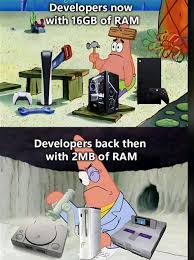
There was a time when optimization wasn’t optional — it was survival. Early software engineers worked with kilobytes of memory, slow processors, and strict hardware limits. Every line of code mattered. Every cycle was precious. If software wasn’t efficient, it simply wouldn’t run.
Fast forward to today, and the landscape looks very different. Hardware is exponentially more powerful, storage is cheap, and cloud resources can scale endlessly. As a result, optimization — once a defining skill of great engineers — is increasingly treated as optional, postponed, or ignored entirely.
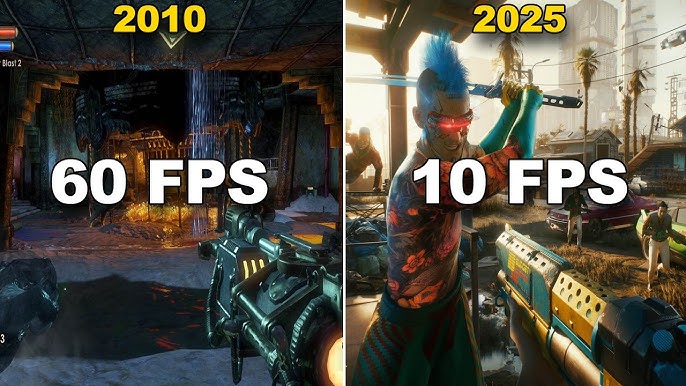
Optimization isn’t gone, but it is undeniably becoming a dying art. And the consequences are visible everywhere: bloated applications, inefficient games, massive system requirements, and hardware being pushed harder than ever just to deliver “acceptable” performance.
The Golden Age of Optimization
In earlier eras of computing, optimization was unavoidable. Developers had no choice but to write tight, efficient code.
Operating systems were designed to run on limited memory. Games were handcrafted to squeeze every ounce of performance from fixed hardware. Developers understood CPU cycles, memory access patterns, cache behavior, and hardware constraints at a deep level.
Optimization was not a late-stage concern — it was part of the design process.
The result? Software that felt responsive, stable, and efficient even on modest hardware.
Hardware Power Removed the Pressure
One of the biggest reasons optimization is fading is simple: hardware got fast enough to hide inefficiencies.
Modern CPUs have multiple cores, massive caches, and advanced scheduling. GPUs can brute-force complex workloads. RAM is plentiful. SSDs eliminate many I/O bottlenecks.
When software runs “well enough” on modern hardware, there is less immediate incentive to optimize.
Instead of asking:
“How can we make this faster?”
Teams increasingly ask:
“Does it run on our target hardware?”
If the answer is yes, optimization often stops there.
Deadlines Favor Features, Not Efficiency
In modern development environments, optimization rarely wins against deadlines.
Product cycles are shorter. Updates are frequent. Feature roadmaps are aggressive. Teams are pressured to ship quickly, iterate constantly, and respond to market demands.
Optimization takes time:
-
Profiling performance
-
Refactoring inefficient code
-
Rewriting systems
-
Testing edge cases
These tasks don’t add visible features. They don’t make flashy marketing headlines. As a result, optimization is often deferred indefinitely.
The result is software that grows heavier with each update.
Abstraction Layers Hide the Cost
Modern development relies heavily on abstraction:
-
High-level programming languages
-
Frameworks
-
Engines
-
Middleware
-
APIs upon APIs
Abstraction improves productivity and accessibility, but it also hides inefficiency.
Developers no longer see the cost of:
-
Memory allocations
-
Garbage collection
-
Cache misses
-
Thread contention
-
Redundant processing
When performance problems arise, they’re often difficult to diagnose because the root cause is buried under layers of abstraction.
Optimization becomes harder — and therefore less likely.
The Rise of “Just Add More Resources”
In the cloud era, scaling inefficiency is often easier than fixing it.
Instead of optimizing code, companies can:
-
Add more CPU cores
-
Allocate more RAM
-
Spin up more servers
-
Increase bandwidth
This mindset shifts optimization from a technical challenge to a financial one. Performance problems are solved by spending money rather than improving efficiency.
While this works in the short term, it creates long-term inefficiencies that scale with usage — increasing costs and energy consumption.
Gaming: A Clear Example of Optimization Decline
Modern games showcase the problem clearly.
Despite massive improvements in GPU power, many new titles:
-
Struggle to maintain stable frame rates
-
Require aggressive upscaling to perform well
-
Launch with performance issues
-
Depend on post-launch patches to become playable
Developers increasingly rely on:
-
Dynamic resolution scaling
-
AI upscaling
-
Frame generation
-
Post-processing tricks
These technologies are impressive, but they often mask inefficiency rather than replace optimization.
Older games running on far weaker hardware often feel smoother and more consistent because they were designed with strict limits in mind.
Optimization Is Hard — and Hard Skills Fade
Optimization requires deep understanding:
-
Low-level systems
-
Memory behavior
-
CPU and GPU pipelines
-
Data-oriented design
-
Profiling tools
These skills take time to develop and are increasingly rare.
As development becomes more specialized, fewer engineers work close to the hardware. Optimization expertise is often siloed into small teams — or lost entirely when experienced engineers leave.
When optimization knowledge isn’t passed down, it slowly disappears.
User Hardware Became the Safety Net
Another reason optimization has declined is the assumption that users will upgrade hardware.
If software runs poorly:
-
Users are told to buy more RAM
-
Upgrade their GPU
-
Replace their PC
-
Subscribe to faster cloud tiers
Instead of improving software efficiency, the burden shifts to the user.
This mindset accelerates hardware obsolescence and increases electronic waste, while software grows more demanding with each release.
The Environmental Cost of Poor Optimization
Inefficient software doesn’t just affect performance — it affects the planet.
Poor optimization leads to:
-
Higher power consumption
-
Increased heat output
-
More data center usage
-
Shorter hardware lifespans
Optimized software uses fewer resources, lasts longer on existing hardware, and consumes less energy.
As sustainability becomes a global concern, ignoring optimization carries real-world consequences beyond convenience.
Optimization Doesn’t Sell — Until It’s Gone
One of the biggest problems is that users only notice optimization when it’s missing.
Smooth performance, low latency, and efficiency are invisible when they work well. They become noticeable only when software stutters, lags, or overheats systems.
Because optimization doesn’t sell as easily as new features, it’s undervalued — until performance collapses and users complain.
By then, the cost of fixing it is much higher.
Why Optimization Still Matters More Than Ever
Despite powerful hardware, optimization is arguably more important today.
Modern systems are:
-
More complex
-
More interconnected
-
More concurrent
-
More power-constrained (especially laptops and mobile devices)
Poorly optimized software:
-
Drains batteries faster
-
Causes thermal throttling
-
Reduces responsiveness
-
Limits scalability
Optimization isn’t about chasing theoretical perfection — it’s about respecting resources, whether that’s hardware, energy, or user time.
Is Optimization Truly Dying — or Just Changing?
Optimization isn’t completely gone. It has shifted.
Today, optimization often appears as:
-
AI-assisted upscaling
-
Compiler optimizations
-
Hardware accelerators
-
Specialized silicon
-
Runtime scaling systems
But these approaches often compensate for inefficiency rather than eliminate it.
True optimization — designing systems to do more with less — is becoming rarer.
How Optimization Could Make a Comeback
Optimization could regain importance if:
-
Hardware progress slows
-
Energy costs rise
-
Sustainability becomes mandatory
-
Users push back against bloated software
-
Performance becomes a competitive advantage again
History suggests that constraints drive creativity. If constraints return, optimization will too.